Features Don't Build Fans: Why the Best Tech Brands Are Moving Beyond Product-Led Marketing
Why product-led marketing is losing its edge, and how tech brands can build trust, differentiation and demand through stronger storytelling.

Fintech branding has a harder job than most.
You’re not selling trainers. You’re asking people to trust you with their salary, their savings, their company’s cash flow. And often, you’re doing it while navigating regulation, scrutiny and scale.
That’s why the strongest Fintech rebrands aren’t cosmetic. They’re structural.
They don’t just refresh a logo. They recalibrate trust.
Here are seven standout Fintech rebrands that understood that, and used brand as a growth lever, not decoration.

“TransferWise” was brilliant for cheap international transfers. Less so when the business expanded into multi-currency accounts, debit cards and broader financial services.
The rebrand aligned perception with reality. Wise had already evolved. The brand simply caught up — and matured. It feels less like a scrappy disruptor and more like a dependable global financial platform.
When your product grows up, your brand must grow up with it.

Stripe serves developers, start-ups and enterprise finance teams. That’s a broad church.
Stripe’s rebrand didn’t shout. It systemised. Every touchpoint, docs, dashboard, homepage, feels engineered. That consistency signals competence, which in payments is everything.
In Fintech, clarity is a competitive advantage.

From cult challenger bank to mainstream financial institution — under regulatory scrutiny.
Monzo didn’t abandon personality. It refined it. The brand now balances approachability with credibility, which is exactly what customers need from a bank.
Novelty attracts. Stability retains.

Operating in the heavily scrutinised BNPL space while maintaining a consumer-first feel.
Klarna shows that credibility doesn’t require beige. Their brand is expressive, but the product experience remains reassuring and simple.
Personality and trust are not opposites. They just need boundaries.

Plaid powers financial infrastructure behind the scenes. Most users don’t know what it does — until they’re asked to connect their bank account.
The rebrand made invisible infrastructure feel understandable, and therefore safer.
Brand matters most at the point of hesitation.

A rapidly expanding feature set and global growth risked overwhelming users.
Revolut’s evolution signals ambition, but also control. The visual system creates coherence across a sprawling ecosystem.
When your product expands, your brand must impose order.
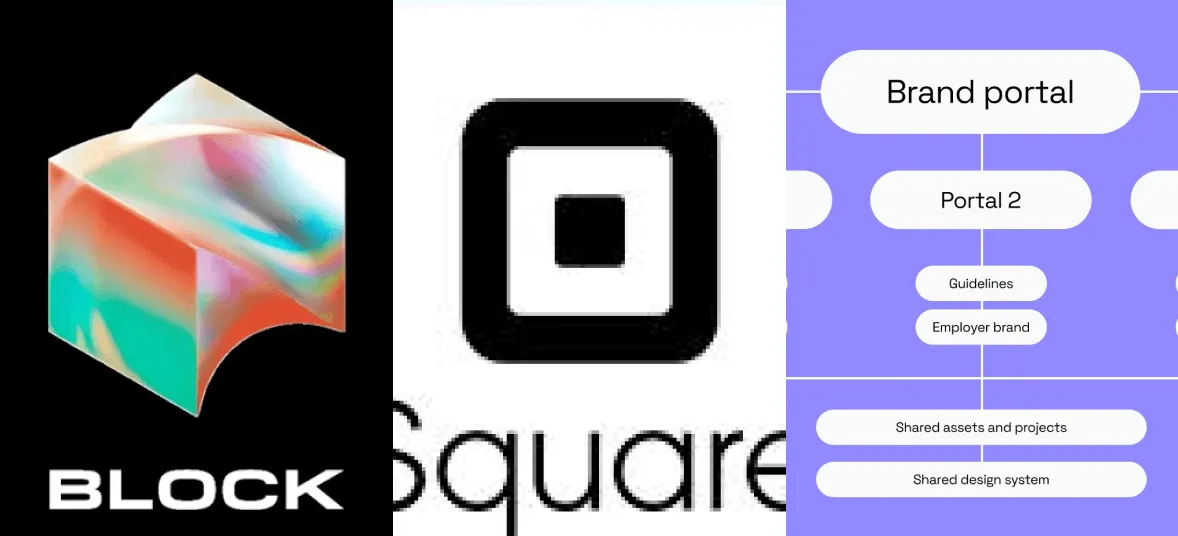
Square had grown beyond its original product. The name limited strategic perception.
This wasn’t aesthetic. It was architectural. The rebrand unlocked flexibility while preserving trust in the original products.
Sometimes rebranding is about future-proofing, not visibility.
They didn’t just redesign a logo. They:
In Fintech, brand isn’t marketing garnish.
It’s risk management, credibility, and growth strategy, expressed visually and verbally.
And the brands that understand that don’t just look better.
They scale better.


